
 Testimonials
Our Clients Feedback
Olivia .C
Ethan .B
Sophia .N

The Palm Harbor air duct cleaning flat-rate is unbeatable. They removed years of dust instantly.



Tom was a pleasure to have working in our home. We are happy with the job and looking forward to better air quality.

The airflow check was incredibly thorough. They diagnosed the pressure imbalance in my Grand Haven house within twenty minutes and provided concrete data showing exactly where we were losing efficiency. The booking process was frictionless and the diagnostic fee was perfectly reasonable.

We were freezing in our new Belle Terre house until they came out for air sealing. The upfront cost was lower than I expected. They sealed every gap instantly, and the drafty rooms vanished overnight.

Old metal ducts in the crawlspace were leaking at almost every joint. They sealed what they could and replaced the worst sections. First month’s electric bill dropped and the upstairs finally cools without cranking the thermostat

Old metal ducts in the crawlspace were leaking at almost every joint. They sealed what they could and replaced the worst sections. First month’s electric bill dropped and the upstairs finally cools without cranking the thermostat

They cleaned the ducts and sanitized everything. Dust on the registers is gone and the house doesn’t smell stale anymore.

A contractor I hired wrecked the ductwork in my Seminole Woods home, but this crew handled the air duct repair flawlessly. Fast, effective, and completely saved my renovation timeline.

I was skeptical because we've had other companies just blow air through the vents and call it done. These guys actually used a brush system and showed us what came out. There was a lot more buildup than I expected, especially in the returns. They sealed a couple of leaky spots while they were here too. Energy bill dropped a bit the following month and the rooms heat more evenly now. They stayed later than planned because they wanted to finish properly. That's the kind of crew you want.


Years of
Experience
Airwayz
Why Choose Airwayz in Ocala?
Personalized Project Management
You get direct support from our team throughout every stage of your insulation removal project.
Clear Timelines
We complete all removals on schedule while maintaining open, transparent communication.
Licensed Professionals
Our certified specialists handle every job safely, efficiently, and with attention to detail.
Local Experience
We understand Ocala’s weather patterns and home efficiency needs, tailoring each solution to your environment.
Our Services
Complete Indoor Air & Comfort Solutions
Everything your home or business needs for cleaner air, better efficiency, and year-round comfort.

Air Filtration Solutions
Breathe easier with deep-cleaned ducts that reduce allergens and improve airflow throughout your entire home.
READ MOREAir Duct Repair
Fix damaged ductwork to restore proper air circulation and increase your HVAC system’s efficiency and comfort.
READ MORE

Air Duct Cleaning
Remove accumulated dust, allergens, and debris to improve indoor air quality and boost your HVAC system’s efficiency.
READ MOREAir Duct Replacement
Upgrade old or damaged ducts for better air quality, lower energy bills, and consistent indoor temperatures.
READ MORE
AC Installation
Stay cool with modern AC systems designed for high efficiency, energy savings, and long-term home comfort.
READ MORE
Dryer Vent Cleaning
Remove lint buildup and improve airflow to reduce fire risk and extend your dryer’s performance and life.
READ MORE
Dryer Vent Replacement
Replace unsafe or outdated vents for a safer, more efficient dryer and improved indoor air quality.
READ MORE
Dryer Vent Installation
Get professional dryer vent installation that ensures proper airflow, safety, and long-term system efficiency.
READ MORE
Blow-In Insulation
Enhance home comfort and energy savings with high-performance insulation installed quickly and mess-free in your attic.
READ MORE
Insulation Removal
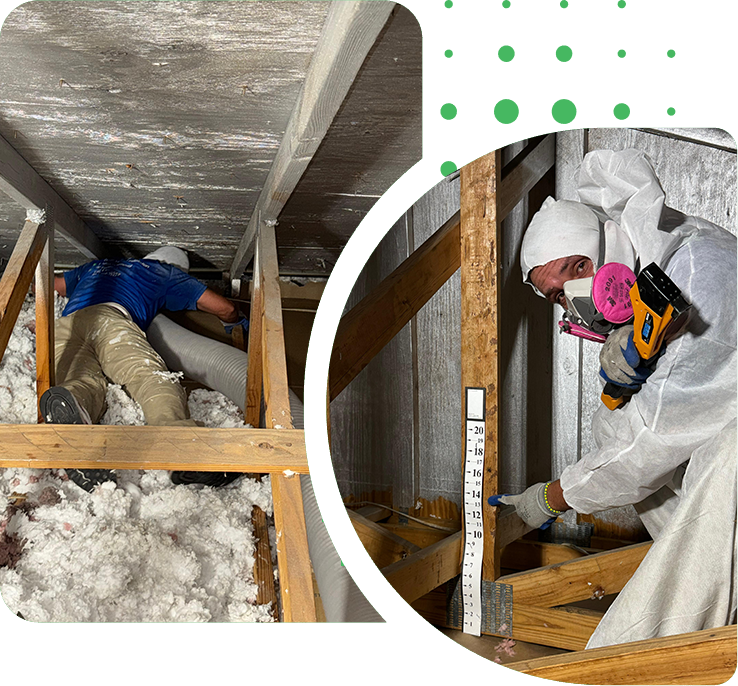
Safely remove old or damaged insulation to eliminate allergens, pests, and moisture before upgrading your space.
READ MORE
Air Sealing
Seal leaks and gaps to stop energy loss, lower bills, and make your home more comfortable year-round.
READ MORE
Airflow Check
Ensure balanced, efficient airflow throughout your home to improve comfort, air quality, and HVAC performance.
READ MORE
UV Light Installation
Protect your home’s air with UV lights that reduce bacteria, mold, and allergens in your duct system.
READ MORE
People Also Ask
The cost to remove old insulation varies based on factors like the type of insulation, the size of your attic, and the labor involved. On average, homeowners in Palm Coast and Flagler County can expect to pay between $1 and $2 per square foot for removal. For a standard attic, this often totals a few hundred to over a thousand dollars. The process is labor-intensive, especially for materials like blown-in fiberglass or vermiculite. For a thorough breakdown of the process and pricing, we recommend reading our internal article titled Insulation Removal. Airwayz Duct and Insulation always provides a free, detailed estimate before any work begins, ensuring transparency for your specific project.
The cost to remove old insulation in Palm Coast and Flagler County depends on factors like the type of insulation, the size of your attic, and accessibility. On average, homeowners can expect to pay between $1.00 and $2.00 per square foot for professional removal. For a standard attic, this often totals $500 to $1,500. However, costs can rise if the old material is contaminated with mold, rodent droppings, or asbestos, which requires specialized handling. To get an accurate estimate, a professional inspection is recommended. For detailed guidance on the process and pricing, we suggest reviewing our internal article titled Insulation Removal. Airwayz Duct and Insulation always recommends comparing quotes from licensed contractors to ensure safe and thorough removal.
To dispose of old insulation, you must follow proper safety and environmental guidelines. First, wear a respirator, gloves, and protective clothing, as disturbed insulation can contain irritants like fiberglass or dust. For small amounts, double-bag the material in heavy-duty trash bags and check with your local waste management facility in Palm Coast or Flagler County for acceptance rules. Many landfills have specific drop-off procedures for construction debris. For larger projects, renting a dumpster designated for bulky waste is often the most efficient method. For guidance on when replacement is the best option, our internal article Complete Guide To Insulation Replacement For Palm Coast’s Coastal Climate provides detailed steps tailored to our coastal climate. Airwayz Duct and Insulation recommends professional removal to ensure safe handling and proper disposal, as certified crews can manage the process from start to finish.
For a 1000 square foot DIY project, the cost to remove old insulation and install new insulation varies widely. Removal is labor-intensive; renting a vacuum can cost $100 to $200 per day, plus disposal fees. For new insulation, fiberglass batts for 1000 sq ft typically run $400 to $800, while blown-in cellulose costs $300 to $600. However, proper removal requires safety gear and knowledge of contaminants like mold or asbestos, which can drastically increase costs and risks. For professional guidance and safe disposal, we recommend reading our internal article titled Insulation Removal. Airwayz Duct and Insulation advises that DIY may save money upfront, but improper removal can damage your HVAC system or void warranties.