
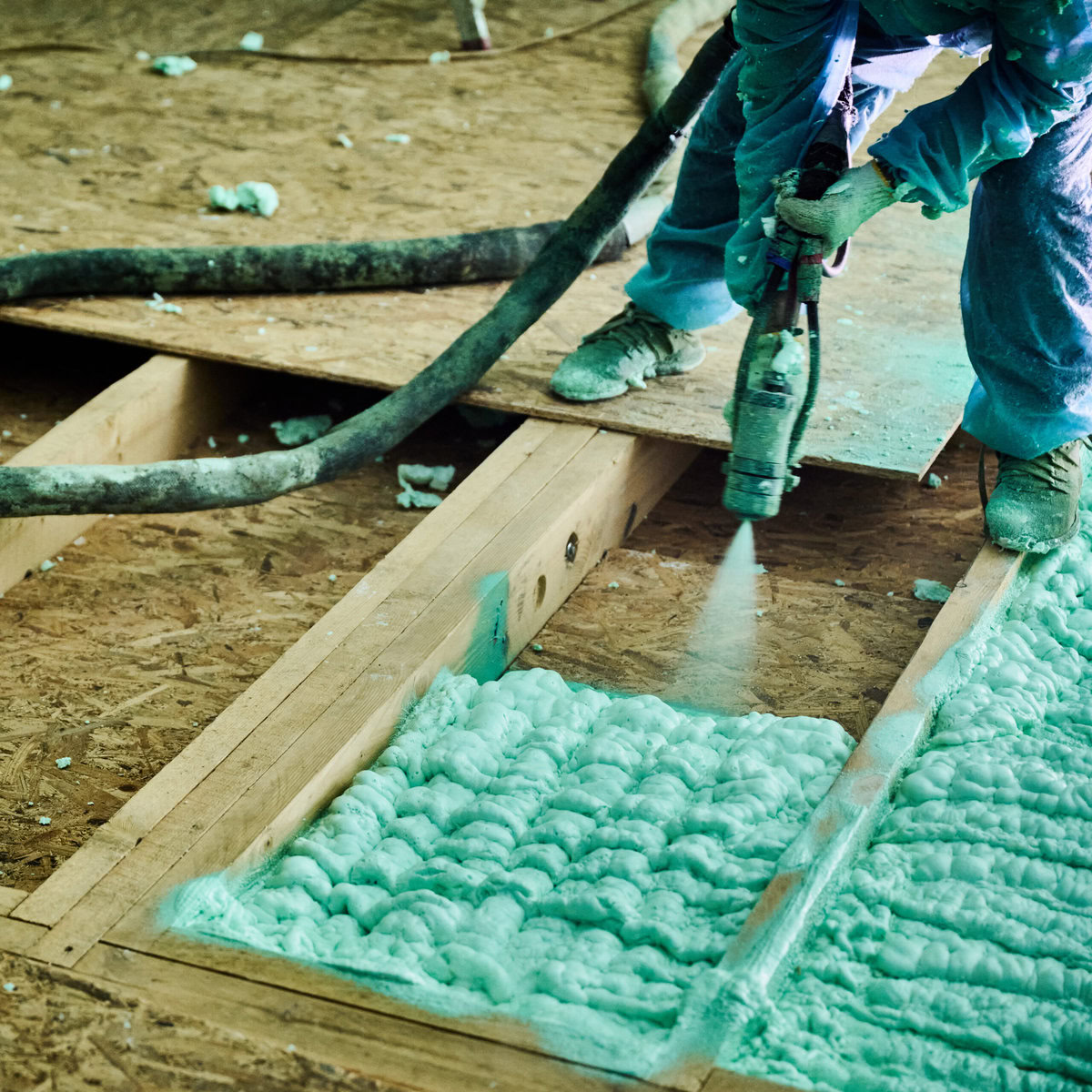
Commercial Insulation Installation Service In Palm Coast Florida
Commercial insulation installation in Palm Coast, Florida, is a specialized building envelope service that applies high-performance thermal, air, and vapor barriers—such as closed-cell spray polyurethane foam, mineral wool, rigid polyisocyanurate, and commercial fiberglass—to non-residential structures. Designed to meet Florida Building Code (Zone 2A) energy efficiency standards, commercial insulation minimizes thermal bridging, controls vapor diffusion in sub-tropical climates, reduces commercial HVAC cooling loads by 20% to 40%, and prevents moisture-induced degradation in retail, office, medical, and industrial properties across Flagler County.
Table of Contents
Commercial Building Envelope Requirements in Palm Coast, FL (Climate Zone 2A)
Commercial properties in Palm Coast operate under demanding environmental conditions characterized by prolonged high ambient temperatures, sustained relative humidity averaging over 75%, high solar radiation, and corrosive salt-laden coastal air. Under the International Energy Conservation Code (IECC) and the 8th Edition Florida Building Code, Energy Conservation, Palm Coast is classified under Climate Zone 2A (Hot-Humid).
To maintain interior environmental control, pass municipal building inspections, and avoid costly structural remediation, commercial roof, wall, and floor assemblies must strictly adhere to continuous insulation (c.i.) and air barrier regulations outlined by the International Code Council (ICC).
+------------------------------------------------------------------------------------+
|                         PALM COAST CLIMATE ZONE 2A ENVELOPE CHALLENGES             |
+------------------------------------------------------------------------------------+
|  [ Solar Radiation & Extreme Heat ]   --->  Thermal Bridging across Steel Framing   |
|  [ 75%+ Ambient Relative Humidity ]   --->  Vapor Migration & Interstitial Mold    |
|  [ Wind-Driven Rain & Salt Air    ]   --->  Envelope Leakage & Metal Oxidation     |
+------------------------------------------------------------------------------------+
Key Regulatory and Climatic Envelope Drivers for Flagler County
- Continuous Air Barrier Mandates: The Florida Energy Conservation Code requires a continuous air barrier across the entire building thermal envelope to restrict unconditioned air infiltration, which otherwise elevates latent cooling loads on commercial rooftop units (RTUs).
- Thermal Bridging Mitigation: Structural steel studs and concrete masonry units (CMU) common in Palm Coast commercial construction exhibit high thermal conductivity. Exterior continuous insulation (c.i.) is mandatory to prevent heat bypass through structural framing members.
- Vapor Retarder Placement: In Climate Zone 2A, moisture vapor moves from the hot, humid exterior toward the cool, air-conditioned interior. Commercial insulation systems must position low-permeance vapor retarders on the exterior side of the thermal boundary to eliminate interstitial condensation inside wall cavities.
- Wind-Uplift & Structural Shearing: Commercial roofs along coastal corridors like Palm Coast Parkway and State Road 100 must withstand tropical wind forces. Closed-cell spray foam insulation provides structural adhesion that increases wind uplift resistance on commercial deck assemblies.
Technical Comparison of Commercial Insulation Materials
Selecting the correct insulation material depends on structural design, fire assembly ratings, vapor resistance requirements, and budget parameters. We utilize core insulation products manufactured in the United States by industry leaders such as Owens Corning, Johns Manville, CertainTeed, Rockwool USA, and Huntsman Building Solutions.
Commercial Insulation Material Specifications
| Insulation Material | R-Value per Inch | Air Barrier Capability | Vapor Permeance Rating | Fire Resistance Rating | Primary Commercial Application |
|---|---|---|---|---|---|
| Closed-Cell Spray Foam (2.0 lb/cu.ft.) | R-6.0 to R-7.0 | Impermeable (at 1.0 inch) | Class II Vapor Retarder (< 1.0 perm) | Requires 15-min thermal barrier (e.g., DC315) | Metal buildings, exterior CMU walls, unvented roof decks |
| Open-Cell Spray Foam (0.5 lb/cu.ft.) | R-3.6 to R-3.8 | Air-impermeable (at 3.5 inches) | Vapor permeable (> 10 perms) | Requires ignition/thermal barrier per code | Interior partition walls, roof soffits, sound attenuation |
| Mineral Wool Board / Batts | R-4.0 to R-4.3 | Air permeable | Vapor permeable | Non-combustible (up to 2,150 degrees F) | Fire-rated wall assemblies, elevator shafts, mechanical rooms |
| Rigid Polyisocyanurate (Polyiso) | R-5.7 to R-6.5 | Impermeable with foil facers | Class I Vapor Retarder (< 0.1 perm) | Class A flame spread rated | Flat commercial roof decks (below membrane), continuous exterior wall insulation |
| Commercial Blown-In Fiberglass | R-2.5 to R-4.3 | Air permeable | Vapor permeable | Non-combustible base material | Commercial attic spaces, ceiling drop grids, retrofits |
Commercial Insulation Types & Thermal Performance Breakdown
Closed-Cell Spray Polyurethane Foam (SPF)
Closed-cell SPF is a high-density liquid-applied insulation that expands into a rigid, closed-cell matrix. It is our top recommendation for Palm Coast commercial applications due to its dual thermal and moisture protection capabilities.
- R-Value Efficiency: Delivers up to R-7.0 per inch, allowing maximum thermal resistance in shallow structural cavities.
- Vapor Management: Acts as an impermeable vapor barrier at 1.5 inches thickness, stopping tropical humidity from reaching interior drywall.
- Structural Enhancement: Adds rack shear strength to exterior wall frame assemblies and metal building panels.
Mineral Wool Assemblies
Mineral wool insulation is engineered from basalt rock and slag. We specify mineral wool in commercial construction for critical fire-safety corridors and sound attenuation between commercial suites.
- Fire Passivity: Melting point exceeds 2,000 degrees Fahrenheit, acting as a passive fire-stop in multi-tenant commercial wall assemblies.
- Acoustic Isolation: High density provides superior Noise Reduction Coefficient (NRC) and Sound Transmission Class (STC) ratings, ideal for medical facilities and professional office suites along Town Center Boulevard.
- Hydrophobic Properties: Repels bulk water while remaining vapor permeable, preventing sag and performance loss if moisture is present during construction.
Continuous Rigid Board Insulation (Polyiso & XPS)
Rigid foam boards are fastened externally over sheathing or structural concrete to satisfy continuous insulation (c.i.) codes established by the U.S. Department of Energy.
- Thermal Bridge Disruption: Eliminates steel stud thermal bridges, raising the overall effective assembly R-value by up to 35%.
- Roof Deck Applications: Forms the primary insulating layer under TPO, EPDM, or modified bitumen commercial roofing membranes.
Real-World Case Studies: Resolving Complex Envelope Challenges
In our extensive field experience across Flagler County, commercial envelope retrofits often reveal complex environmental and structural conflicts. Below are two examples of actual commercial challenges we resolved using customized insulation systems.
Case 1: Extreme Condensation and Heat Accumulation in an Industrial Warehouse
- The Challenge: A 40,000-square-foot commercial distribution facility along Hargrove Grade experienced severe roof sweating during summer months. Moisture condensation on the uninsulated corrugated metal deck dripped onto stored commercial inventory, while radiant heat pushed interior floor-level temperatures above 92 degrees Fahrenheit.
- Our Solution: We engineered a spray-applied continuous thermal barrier. First, we surface-treated rusted structural purlins and purged ambient oil residues. We then applied two inches of 2.0 lb closed-cell spray polyurethane foam directly to the metal underside.
- The Outcome: The closed-cell foam elevated the interior roof deck surface temperature above the dew point, completely eliminating condensation. Ambient interior temperatures dropped by 14 degrees Fahrenheit, and cooling load stress on office-adjacent HVAC units was reduced by 28%.
Case 2: Acoustic Transmission and Strict Fire Code Compliance in a Multi-Tenant Medical Complex
- The Challenge: A multi-tenant medical facility on Town Center Boulevard required strict acoustic privacy between patient consultation rooms (requiring minimum STC 50) and had exposed spray foam in an above-ceiling return air plenum that failed local fire inspector approval under Florida Building Code Section 2603.4.
- Our Solution: We removed failing batt materials and installed high-density mineral wool sound attenuation batts inside all interior partition walls, sealing perimeter gaps with acoustical sealant. In the open ceiling plenum, we applied a certified 15-minute thermal barrier intumescent coating (DC315) directly over the exposed foam insulation at a measured wet-film thickness of 14 mils.
- The Outcome: The facility passed all municipal fire code and air-plenum safety inspections, while post-installation sound testing verified an acoustic attenuation rating of STC 53 across tenant walls.
Specialized Commercial Applications by Property Type
Industrial Warehouses & Metal Buildings
Metal commercial buildings along the US-1 and Hargrove Grade industrial corridors suffer from extreme radiant heat transfer and internal condensation.
- Condensation Elimination: Spraying 2 inches of closed-cell foam directly to metal deck undersides raises the surface temperature above the dew point, stopping moisture dripping.
- Radiant Heat Blocking: Reflective foil-faced continuous insulation systems reduce interior ambient temperatures by up to 15 degrees Fahrenheit without active mechanical cooling.
Multi-Tenant Office Buildings & Retail Centers
Strip shopping plazas and office parks along Palm Coast Parkway require energy containment and acoustic privacy between adjacent tenant spaces.
- Tenant Separation Walls: High-density fiberglass or mineral wool batts installed within STC 50+ rated wall assemblies prevent sound transfer between commercial clients.
- Drop-Ceiling Thermal Blankets: Laying unfaced fiberglass or blown-in insulation over drop-ceiling tiles prevents thermal migration into unconditioned plenum spaces.
Medical Facilities & Educational Buildings
Healthcare clinics and school facilities require precise indoor air quality (IAQ) and zero-VOC materials during insulation retrofits.
- Low-VOC / Greenguard Gold Certified Foams: Ensures immediate re-occupancy standards are met without chemical off-gassing.
- Ductwork and Mechanical Insulation: Insulating chilled water pipes and supply ductwork prevents surface sweating, eliminating conditions that harbor mold and bacterial growth. Combining proper building envelope air sealing with duct services provided by Airwayz Air Duct and Insulation maintains systemic thermal control and pristine indoor air quality.
Fire Code Compliance, Thermal Barriers, and Safety Standards
The Florida Building Code (FBC) mandates that all foam plastic insulation installed in commercial buildings be separated from the interior of the building by an approved thermal barrier or ignition barrier.
+------------------------------------------------------------------------------------+
|                         COMMERCIAL FOAM FIRE SAFETY PROTOCOL                       |
+------------------------------------------------------------------------------------+
| [ Foam Plastic Insulation ] --> [ 15-Minute Thermal Barrier (1/2" Gypsum Board) ]  |
|                                 OR                                                 |
| [ Foam Plastic Insulation ] --> [ Intumescent Coating System (e.g., DC315 Paint) ]|
+------------------------------------------------------------------------------------+
Critical Fire Safety Regulations
- 15-Minute Thermal Barrier (IBC/FBC Section 2603.4): Foam plastic insulation must be covered by a 0.5-inch gypsum board or an equivalent tested assembly that limits temperature rise during a fire.
- Intumescent Coatings: In exposed commercial spaces, attics, or ceiling plenums where gypsum drywall is impractical, code-approved intumescent fire-retardant coatings (such as DC315) are sprayed directly over the foam insulation.
- NFPA 286 / UL 1715 Testing: Applied commercial foam systems must hold full-scale fire testing certification to verify low flame-spread and smoke-developed indexes (Flame Spread < 25, Smoke Developed < 450 per ASTM E84).
Financial Incentives, Tax Deductions, and ROI
Commercial insulation upgrades provide verifiable financial returns through operational energy reductions, equipment downsizing, and federal tax incentives. According to commercial performance guidelines from ENERGY STAR Commercial Buildings, space heating and cooling account for over 35% of total energy use in commercial structures.
IRS Section 179D Energy Efficient Commercial Buildings Deduction
Under Internal Revenue Code Section 179D, commercial building owners who install qualified energy-efficient building envelope improvements—including thermal insulation—can claim a federal tax deduction.
- Standard Deduction Pathway: Ranges from 0.59 US dollars to 1.19 US dollars per square foot for achieving 25% to 50% energy savings over ASHRAE Standard 90.1 benchmarks.
- Enhanced Deduction Pathway (Prevailing Wage & Apprenticeship): When meeting local Prevailing Wage and Apprenticeship (PWA) requirements during construction, the deduction increases from 2.97 US dollars up to 5.94 US dollars per square foot depending on energy savings achieved.
Florida Power & Light (FPL) Commercial Rebates
Florida Power & Light offers commercial custom and prescriptive rebates for business customers in Flagler County who upgrade their roof deck insulation or exterior wall insulation systems.
- Roof Insulation Incentives: Rebates calculated based on square footage when raising existing low-slope roof insulation levels to meet current energy codes.
- HVAC Tonnage Reduction: Lowering building peak thermal loads allows business owners to downsize replacement commercial HVAC units (tonnage requirement drops by 15% to 25%), lowering initial capital expenditure.
Return on Investment (ROI) Timeline
+------------------------------------------------------------------------------------+
|                          TYPICAL COMMERCIAL INSULATION ROI                         |
+------------------------------------------------------------------------------------+
| Year 1: 20–40% Reduction in Monthly Cooling Costs + Sec 179D Tax Credit Claimed    |
| Year 2–4: Cumulative Energy Savings Cover Initial Installation Capital Outlay      |
| Year 5+: Net Positive Return with Extended HVAC Equipment Lifespan                 |
+------------------------------------------------------------------------------------+
Step-by-Step Commercial Installation Workflow
Executing a successful commercial insulation installation requires strict adherence to project management schedules to prevent business downtime.
- Comprehensive Thermal Envelope Audit: We conduct infrared thermography scans and blower door air-leakage testing to map existing thermal breaks, air leaks, and moisture accumulation zones.
- Substrate Preparation and Containment: Surfaces are cleaned of debris, oil, and rust. Polyethylene plastic sheeting isolates active tenant work zones, and negative-air scrubbing machines are installed to filter particulate matter.
- Precision Application: Certified installers apply selected insulation materials in accordance with manufacturer technical data sheets (TDS) and International Code Council standards. Spray foam applications are executed in controlled pass thicknesses to manage exothermic chemical reaction temperatures.
- Fire Barrier and Intumescent Application: Intumescent fire-retardant paint or thermal barrier boards are installed over foam insulation where required by local building code officials.
- Quality Assurance and Curing Sign-Off: Pin-gauge depth tests, density checks, and adhesion testing verify proper coverage. Off-gassing curing periods are completed under mechanical ventilation before re-occupancy is granted.
Frequently Asked Questions
What is the required R-value for commercial roof and wall insulation in Palm Coast, Florida?
Under the 8th Edition Florida Building Code Energy Conservation (Climate Zone 2A), commercial low-slope roofs with continuous insulation entirely above the deck require a minimum of R-30 continuous insulation. Commercial steel-framed walls typically require R-13 cavity insulation combined with R-7.5 continuous exterior insulation, or R-19 in wood-framed cavities, depending on whether the structure is categorized as a conditioned or semi-heated space.
How does commercial spray foam insulation handle Palm Coast’s high coastal humidity and salt air?
Closed-cell spray foam insulation forms an air-impermeable and moisture-impermeable barrier that prevents moisture-laden, salt-dense coastal air from penetrating structural wall and roof cavities. By blocking humid air from reaching cool interior surfaces, closed-cell foam stops interstitial condensation, protecting structural metal studs, z-girts, and metal roof decks from rust, oxidation, and mold proliferation.
Can commercial insulation installation be performed during regular business hours without disrupting operations?
Yes. We schedule commercial insulation projects to minimize operational downtime. For spray polyurethane foam applications requiring specific safety containment and curing protocols, spraying is typically executed during evening shifts, overnight, or on weekends. For mineral wool batts, rigid polyiso boards, or blown-in installations, work can be phased room-by-room using sealed negative-pressure containment zones to prevent dust, noise, or minor odor transfer to active customer spaces.
What tax incentives and rebates are available for commercial insulation retrofits in Florida?
Commercial property owners in Palm Coast can utilize the Federal IRS Section 179D Commercial Buildings Energy Efficiency Tax Deduction, which provides up to 5.94 US dollars per square foot for qualifying envelope and insulation retrofits that meet energy reduction targets and prevailing wage standards. Additionally, Florida Power & Light (FPL) provides business energy efficiency incentives for custom roof insulation and building envelope upgrades that lower peak electrical demand.
How does upgrading commercial insulation impact commercial HVAC sizing and operating costs?
Upgrading the building envelope insulation reduces both sensible and latent heat loads on commercial HVAC systems by 20% to 40%. By stopping unconditioned air infiltration and solar heat gain, the required mechanical cooling tonnage drops significantly. This allows facility owners to install smaller, less expensive RTU units during replacement cycles while reducing daily electricity usage and equipment runtime wear.
Sources
- Florida Building Commission: Florida Building Code 8th Edition (2023) Energy Conservation – Commercial Provisions. Available at: https://codes.iccsafe.org/content/FBC2023P1
- Internal Revenue Service (IRS): Energy Efficient Commercial Buildings Deduction Section 179D. Available at: https://www.irs.gov/credits-deductions/energy-efficient-commercial-buildings-deduction
- U.S. Department of Energy (DOE): Building Energy Codes Program – Climate Zone 2A Requirements. Available at: https://www.energy.gov/eere/buildings/building-energy-codes-program
- U.S. Environmental Protection Agency (EPA): ENERGY STAR Commercial & Industrial Buildings Guidance. Available at: https://www.energystar.gov/buildings
“`json schema
{
"@context": "https://schema.org",
"@graph": [
{
"@type": "Service",
"@id": "https://airwayzairductandinsulation.com/#service",
"name": "Commercial Insulation Installation Service",
"provider": {
"@type": "LocalBusiness",
"name": "Airwayz Air Duct and Insulation",
"telephone": "386-283-2002",
"address": {
"@type": "PostalAddress",
"addressLocality": "Palm Coast",
"addressRegion": "FL",
"addressCountry": "US"
}
},
"areaServed": {
"@type": "AdministrativeArea",
"name": "Flagler County, FL"
},
"description": "Professional commercial insulation installation services in Palm Coast, FL, including closed-cell spray foam, mineral wool, rigid polyiso, and blown-in insulation compliant with Climate Zone 2A Florida Building Code."
},
{
"@type": "FAQPage",
"@id": "https://airwayzairductandinsulation.com/#faq",
"mainEntity": [
{
"@type": "Question",
"name": "What is the required R-value for commercial roof and wall insulation in Palm Coast, Florida?",
"acceptedAnswer": {
"@type": "Answer",
"text": "Under the 8th Edition Florida Building Code Energy Conservation (Climate Zone 2A), commercial low-slope roofs with continuous insulation entirely above deck require a minimum of R-30 continuous insulation. Commercial steel-framed walls typically require R-13 cavity insulation combined with R-7.5 continuous exterior insulation."
}
},
{
"@type": "Question",
"name": "How does commercial spray foam insulation handle Palm Coast’s high coastal humidity and salt air?",
"acceptedAnswer": {
"@type": "Answer",
"text": "Closed-cell spray foam insulation forms an air-impermeable and moisture-impermeable barrier that prevents moisture-laden, salt-dense coastal air from penetrating structural wall and roof cavities, stopping interstitial condensation and metal oxidation."
}
},
{
"@type": "Question",
"name": "Can commercial insulation installation be performed during regular business hours without disrupting operations?",
"acceptedAnswer": {
"@type": "Answer",
"text": "Yes. Work can be scheduled during off-hours, night shifts, or weekends for spray foam applications, or phased room-by-room using sealed negative-pressure containment zones for batts and rigid board installation."
}
},
{
"@type": "Question",
"name": "What tax incentives and rebates are available for commercial insulation retrofits in Florida?",
"acceptedAnswer": {
"@type": "Answer",
"text": "Commercial property owners can take advantage of the IRS Section 179D tax deduction of up to 5.94 US dollars per square foot, along with customized FPL business energy efficiency rebates."
}
},
{
"@type": "Question",
"name": "How does upgrading commercial insulation impact commercial HVAC sizing and operating costs?",
"acceptedAnswer": {
"@type": "Answer",
"text": "Upgrading insulation reduces peak sensible and latent cooling loads by 20% to 40%, allowing facility owners to downsize HVAC tonnage requirements and lower ongoing electrical consumption."
}
}
]
}
]
}