
Palm Coast’s Humidity Is Tough Enough: Don’t Let Dirty Ducts Add To It.
Table of Contents
The Mechanism of Duct Contamination in High-Humidity Climates
High ambient humidity in coastal Florida climates like Palm Coast interacts directly with accumulated organic dust inside HVAC ductwork, transforming passive debris into a moist sponge that fosters microbial growth and reduces sensible cooling efficiency. When relative humidity exceeds 60 percent, uncleaned duct surfaces absorb airborne moisture, raising indoor latent heat loads and forcing air conditioners to run longer cycles.
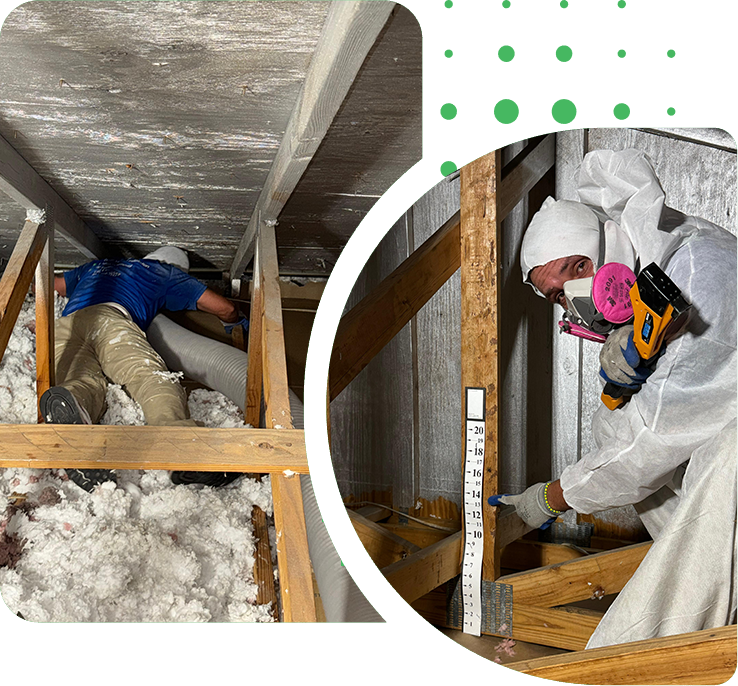
During our field service operations in Palm Coast, we frequently encounter homes suffering from chronic indoor mugginess despite having modern cooling systems. In one notable case, a local homeowner reported persistent 72 percent indoor relative humidity and a distinct musty odor even after replacing their compressor unit. Upon opening the duct plenum, we uncovered heavy dust loading that had saturated with condensed moisture, effectively re-humidifying the air stream every time the blower activated.
We resolved this complex issue by executing a comprehensive system restoration. We mechanically detached and degreased the evaporator coil, deployed negative-pressure HEPA extraction throughout all branch lines, and sealed leaking duct collars with industrial mastic. Within 24 hours of completing our intervention, the indoor relative humidity dropped to a stable 48 percent, and the home reached its set temperature without short-cycling.
Uncontrolled humidity inside ductwork leads to several recurring failure modes:
- Microbial proliferation along internal liner insulation and flex duct coils.
- Evaporator coil icing caused by restricted return airflow and elevated thermal resistance.
- Blower motor overheating as static pressure rises beyond initial design limits.
- Corrosion of metallic duct fasteners, rusted drain pans, and premature cabinet degradation.
Identifying Contaminants and Field Diagnostic Protocols
Identifying internal duct contamination requires systematic visual and airflow diagnostics rather than relying solely on surface dusting symptoms. Contaminants range from biological mold spores and pollen to pet dander and fibrous dust, each degrading indoor air quality and altering static pressure across system components. Field testing helps distinguish normal environmental dust from severe systemic accumulation requiring targeted mechanical removal.
In accordance with U.S. Environmental Protection Agency (EPA) guidance, professional intervention becomes essential when visible microbial growth, vermin infestation, or substantial particulate blockages are present. Our diagnostic inspections evaluate both supply and return runs to catalog specific particulate types.
Common indoor air contaminants accumulating within coastal HVAC systems include:
- Pollen and Botanical Allergens: Seasonal plant matter drawn through fresh air intakes and unsealed return plenums.
- Fungal and Mold Spores: Microorganisms that colonize damp debris layers near indoor cooling coils.
- Dander and Epidermal Debris: Human and animal skin flakes that serve as nutrient sources for dust mites.
- Construction Particulates: Gypsum dust, sawdust, and masonry residue left behind from prior building renovations.
When these pollutants accumulate, system static pressure increases, reducing total cubic feet per minute airflow. We utilize anemometers and static pressure probes to measure airflow velocity across the system. Drops in airflow velocity indicate that debris accumulation is actively choking your HVAC equipment.
Sequential HVAC System Restoration Process
A standard duct vacuuming fails to resolve systemic contamination; true HVAC restoration demands a rigorous multi-stage source removal method adhering to strict negative pressure protocols. By isolating system zones and using targeted agitation tools alongside containment systems, technical teams ensure extracted particulates never re-enter the indoor breathing envelope. Adhering to sequential procedures guarantees thorough decontamination across all system components.
- Inspect the complete air distribution network using high-resolution video fiberscopes to map structural debris zones.
- Seal all ceiling registers and floor grilles to establish an isolated closed-loop environment under localized negative pressure.
- Connect a high-performance vacuum system equipped with HEPA filtration to the main trunk line.
- Insert pneumatically powered whips, air skippers, and rotary brushes into individual branch ducts to agitate surface debris.
- Clean the air handler assembly, including the blower wheel, internal housing surfaces, and condensate drain pan.
- Decontaminate supply and return evaporator coils using non-acidic foaming cleansers and targeted pressure rinsing.
- Verify complete particulate extraction through post-cleaning visual inspections before balancing air diffusers.
This step-by-step methodology guarantees that heavy particulates are extracted directly into external containment units. Skipping any step allows residual debris to migrate right back into the living space upon system restart.
Strategic Thermal Envelope Upgrades: Duct Sealing and Attic Insulation
Duct cleaning solves internal contamination, but optimizing moisture control requires addressing the attic thermal envelope where leaky ducts pull in hot, humid air. Upgrading degraded insulation while sealing supply and return plenums forms an airtight barrier that prevents condensation and keeps conditioned air from leaking into unconditioned spaces. Combining these interventions stabilizes indoor humidity and maximizes cooling system capacity.
Unsealed attics in coastal Florida regularly reach temperatures exceeding 120 degrees Fahrenheit during peak summer months. When ductwork running through these spaces suffers from loose joints or torn vapor barriers, unconditioned thermal energy infiltrates the cooling stream. This dynamic increases latent heat, forcing cooling equipment to run continuously to extract air moisture.
We evaluate duct sealing and insulation projects based on clear conditional criteria:
- If duct leakage exceeds 10 percent of total airflow, prioritize high-velocity aerosol duct sealing or manual mastic application.
- If attic blow-in insulation has settled below R-30 thickness, install blown fiberglass or cellulose up to R-38 or R-49 standards.
- If flex duct outer jackets show heavy tearing or thermal sweating, replace damaged runs with double-walled insulated flex ducting.
Executing duct sealing alongside insulation upgrades eliminates thermal bridging. This trade-off analysis confirms that while insulation requires upfront capital investment, the resulting drop in monthly energy bills yields measurable financial returns within two to three cooling seasons.
Dryer Exhaust System Safety and Airflow Optimization
Clogged dryer exhaust vents increase home fire risks and force clothes dryers to consume excessive electrical energy while generating residual heat in surrounding living areas. Removing compacted lint restores proper airflow velocity, drastically shortens drying cycle times, and protects structural components against heat-induced degradation. Periodic exhaust cleaning eliminates localized thermal build-up and lowers utility bills across the household.
During routine maintenance calls, we frequently uncover severe lint restriction within laundry exhaust runs. Following National Air Duct Cleaners Association (NADCA) standards, dryer exhaust velocity must remain strong enough to carry moisture and suspended fibers completely outside the building envelope. When lint accumulates along corrugated foil connectors or long duct runs, backpressure builds up rapidly.
This backpressure leads to several critical system failure modes:
- Thermal cutoff switch tripping caused by internal appliance overheating.
- Extended drying times requiring two or three complete cycles per load of clothes.
- Moisture migration into surrounding drywall cavities, encouraging localized mold formation.
- Excessive mechanical wear on dryer drum belts, rollers, and heating elements.
By routing high-pressure air whips through the exterior termination vent down to the appliance connection, we dislodge packed lint clusters safely. Restoring proper exhaust flow protects residential structures from preventable fires and reduces household electrical consumption.
Comprehensive Performance Evaluation: Clean vs. Contaminated Systems
Comparing clean and contaminated HVAC systems highlights clear trade-offs across airflow dynamics, energy consumption, and equipment lifespan. Evaluating system performance before and after service provides measurable proof of improved static pressure, lowered humidity levels, and reduced operational overhead for property owners. Maintaining clean ductwork ensures consistent temperature delivery and optimal system reliability throughout peak cooling seasons.
| Evaluation Metric | System with Clean Ducts & Sealed Vents | System with Contaminated & Unsealed Ducts |
|---|---|---|
| Indoor Relative Humidity | Maintained consistently between 45 percent and 52 percent | Spikes above 65 percent, causing muggy air indoor comfort issues |
| Static System Pressure | Operates within normal manufacturer specifications (0.3 – 0.5 in. w.g.) | Elevated static pressure exceeding 0.8 in. w.g., straining blower motors |
| Airflow Output (CFM) | Maximum rated airflow delivered to all supply registers | Restricted airflow, creating hot spots in distant home rooms |
| Cooling Energy Costs | Lowered consumption due to shorter compressor run cycles | Higher electrical bills driven by continuous latent cooling loads |
| Equipment Lifespan | Extended mechanical life; minimal component wear | Premature component failure, coil corrosion, and compressor burnout |
| Fire Safety Risk | Low risk with clear, unobstructed dryer exhaust lines | High fire risk due to heavy lint backpressure in exhaust vents |
This trade-off analysis clearly demonstrates that dirty duct systems generate persistent operational inefficiencies that cost property owners significantly over time in utility expenses and repair invoices.
Decision Framework for Duct Maintenance Interventions
Determining whether to clean, repair, or replace ductwork depends on structural integrity, moisture damage severity, and system age. A structured decision framework helps property owners avoid costly misdiagnoses while maximizing indoor environmental comfort and long-term HVAC performance. Selecting the correct maintenance intervention requires evaluating component cleanliness, duct sealing performance, and underlying insulation conditions.
We recommend applying the following conditional logic when evaluating ductwork maintenance choices:
- If ductwork is structurally sound but contains loose debris or dust: Pursue comprehensive mechanical source removal and negative-pressure duct cleaning.
- If ducts display visible microbial growth or water damage: Execute duct cleaning combined with surface antimicrobial treatments, and fix external plumbing or roof leaks immediately.
- If duct connections leak air into unconditioned attics: Apply mastic sealant and foil-tape reinforcement to all plenum collars and branch junctions.
- If flex duct inner liners are collapsed, torn, or crushed: Replace damaged duct sections entirely rather than attempting surface repairs.
- If attic insulation is water-stained or severely compacted: Remove ruined insulation, seal attic bypasses, and blow in fresh thermal insulation material.
Applying this structured approach prevents unnecessary capital expenditure on full duct replacements when targeted cleaning and sealing achieve superior results.
Frequently Asked Questions
How frequently should air ducts be cleaned in Palm Coast?
Air ducts should be professionally inspected every two years and thoroughly cleaned every two to three years in coastal Florida environments. The regional combination of high humidity, elevated pollen counts, and year-round air conditioning use accelerates debris accumulation compared to cooler, drier geographic zones.
Can dirty air ducts increase indoor humidity levels?
Yes, dirty air ducts actively increase indoor humidity levels by retaining airborne moisture within layers of organic dust debris. When cool air passes over damp debris inside the ductwork, moisture re-evaporates back into the airflow stream, driving up relative humidity throughout the home.
How do we determine if air ducts require immediate cleaning?
Immediate cleaning is required if you observe visible dust clouds blowing from registers, smell persistent musty odors when the blower turns on, or notice rapid dust accumulation on furniture surfaces. Elevated monthly utility bills and worsening indoor allergy symptoms also signal severe internal duct restriction.
What is the financial cost of professional air duct cleaning?
Professional air duct cleaning costs vary based on home square footage, system accessibility, and total register count, generally ranging from several hundred to over one thousand US Dollars. Investing in complete system source removal delivers long-term savings by reducing monthly energy usage and preventing premature HVAC repairs.
How do property owners verify the reputation of an HVAC cleaning provider?
Property owners can verify a provider’s reputation by checking for active NADCA certification, confirming comprehensive general liability insurance, and reviewing verified customer testimonials. A trustworthy company provides transparent upfront estimates and uses high-power negative pressure vacuum systems rather than basic household vacuums.
Sources
- U.S. Environmental Protection Agency – Air Duct Cleaning Guidance: https://www.epa.gov/indoor-air-quality-iaq/should-you-have-air-ducts-your-home-cleaned
- National Air Duct Cleaners Association – Standards & Credentials: https://nadca.com
Related Articles
Why Homes In Florida Get So Dusty
Palm Coast’s Humidity & Your Home: A Recipe For Mold In Air Ducts
A Breath Of Fresh Air For Your Entire Household
Average Cost Of An AC Tune-Up In Flagler County
Enhancing Air Quality In Your Bedroom
People Also Ask
Yes, dirty ducts can contribute to humidity issues in your home. When dust, debris, and microbial growth accumulate inside ductwork, they can restrict airflow and create a breeding ground for moisture. This blockage can prevent your HVAC system from properly dehumidifying the air, leading to higher indoor humidity levels. Additionally, dirty ducts often harbor mold and mildew, which thrive in damp environments and can release spores that worsen air quality. To combat this, regular duct cleaning and maintenance are essential. For homeowners in Palm Coast and Flagler County, professional service from Airwayz Duct and Insulation can help address these concerns. For more insights, refer to our article Jacksonville’s Answer To Cleaner Indoor Air to understand how clean ducts support balanced humidity and healthier indoor air.
A dusty house after air duct cleaning is often a temporary issue caused by the cleaning process itself. When a system is cleaned, especially if it has years of built-up debris, some fine particles can be dislodged and settle into your living space before the system fully filters them out. This is more common if the technician did not use a high-powered vacuum with a HEPA filter or if the return vents were not properly sealed during the job. Additionally, if your air filter is old or low-quality, it may fail to capture the newly stirred dust. For a thorough understanding of maintenance schedules and what to expect, Airwayz Duct and Insulation recommends reviewing our internal article titled How Often Should You Clean Your Air Ducts? The 2026 Homeowner’s Guide to Frequency, Signs, and Professional Standards. To prevent future dust, ensure your HVAC system is properly sealed and consider upgrading your air filter to a MERV-8 or higher rating.
Yes, cleaning your air ducts can help address moisture issues, but it is not a standalone solution. Moisture in ducts often stems from condensation, leaks, or inadequate insulation. When dust, debris, and mold spores accumulate in a damp environment, they can worsen air quality and promote microbial growth. Professional duct cleaning removes these contaminants, which reduces the breeding ground for mold and mildew. However, to fully resolve moisture problems, you must also fix the root cause, such as sealing leaks or improving insulation. At Airwayz Duct and Insulation, we recommend pairing duct cleaning with proper insulation to prevent condensation. For more details, see our internal article titled Palm Coast Air Duct Cleaning & Insulation Services | Airwayz. This combined approach helps maintain a dry, healthy system in your Palm Coast home.
High humidity inside a home can lead to discomfort, mold growth, and damage to your property. The ideal indoor humidity level is between 30 and 50 percent. Common causes include poor ventilation, leaky ductwork, or an oversized air conditioning system that doesn't run long enough to dehumidify. To manage this, ensure your crawl space is properly sealed and your bathroom fans are vented outdoors. Using a dehumidifier can also help. For a deeper understanding of how to improve your home's air quality and moisture levels, we recommend reading our internal article titled A Breath Of Fresh Air For Your Entire Household. Airwayz Duct and Insulation can inspect your duct system for leaks that may be pulling in humid outdoor air.
In a home, indoor humidity levels consistently at 75% are significantly above the recommended range of 30-50% and can create serious problems. This high moisture content fosters an ideal environment for mold, mildew, dust mites, and bacteria to thrive, particularly within your HVAC system and ductwork. For homeowners in Palm Coast, this is a critical concern due to the naturally humid coastal climate. If your indoor humidity remains this high, it can lead to musty odors, respiratory irritation, and damage to your home's structure. Airwayz Duct and Insulation recommends addressing the root cause immediately. For a deeper understanding of how local conditions affect your ducts, please refer to our internal article titled Palm Coast's Humidity & Your Home: A Recipe For Mold In Air Ducts. A professional duct inspection is often necessary to check for microbial growth hidden within the system.

