
The Unseen Upgrade That Boosts Your Home’s Value
Table of Contents
The Invisible Infrastructure Impacting Your Home Efficiency and Air Quality
Your air duct and insulation network serves as the core respiratory system of your residential property, directly governing indoor air quality, thermal distribution, and monthly energy consumption. Neglecting these hidden components allows debris, particulate matter, and micro-contaminants to accumulate while unsealed joints leak conditioned air directly into unconditioned structural voids.
In our daily operations across residential and commercial sites, we frequently uncover distribution networks hampered by years of particulate buildup and structural degradation. Central forced-air heating and cooling systems continuously recirculate air through return vents, pulling in ambient dust, pet dander, pollen, and volatile particulate matter. When dust settles inside supply trunks, it restricts airflow and creates localized reservoirs for microbial growth under high humidity conditions.
The thermal envelope of your building relies on a clean, sealed air pathway working in unison with rated attic insulation. If you operate an HVAC system without routine inspection of these hidden components, you risk premature mechanical wear and elevated utility costs.
- Elevated biological and particulate contaminants recirculating throughout living spaces.
- Mechanical strain on blower motors caused by restrictive airflow resistance.
- Increased continuous operating hours required to satisfy set thermostat temperatures.
- Accelerated degradation of secondary filtration components due to heavy dust loads.
Quantifying the Financial and Thermal Losses of Leaky Ductwork
Leaky air ducts waste twenty to thirty percent of conditioned air generated by forced-air HVAC equipment, driving up utility expenses and forcing mechanical components to run continuously. Sealing system leaks and adding thermal insulation mitigates these energy loss pathways, restoring proper static pressure and maintaining designed thermal performance across every room.
When air leaks occur on the supply side of your system, conditioned air spills directly into unconditioned attics or crawlspaces. Conversely, leaks on the return side actively draw in hot, humid, or dusty air from unconditioned structural voids. The ENERGY STAR duct sealing guide highlights that leaky ductwork reduces overall HVAC system efficiency by up to twenty percent while introducing unwanted pollutants into living areas.
In coastal and humid regions like Palm Coast and St. Augustine, air leakage introduces excess moisture into sheet metal and flex ducting. This moisture leads to thermal condensation, compromised thermal resistance (R-value) in surrounding insulation, and potential structural rot along wooden framing members.
To evaluate whether your home requires immediate duct sealing or insulation upgrades, we recommend prioritizing decisions based on specific mechanical symptoms:
- If your system runs continuously without reaching the thermostat setpoint during peak temperatures, prioritize pressure testing and duct leakage sealing.
- If individual rooms exhibit significant temperature differentials exceeding four degrees Fahrenheit, inspect branch lines for mechanical disconnects or crushed flex ducts.
- If dusting is required multiple times per week despite regular filter changes, perform a total system cleanliness assessment and seal return plenum leaks.
Field Case Study: Resolving Extreme Humidity and Airflow Imbalances
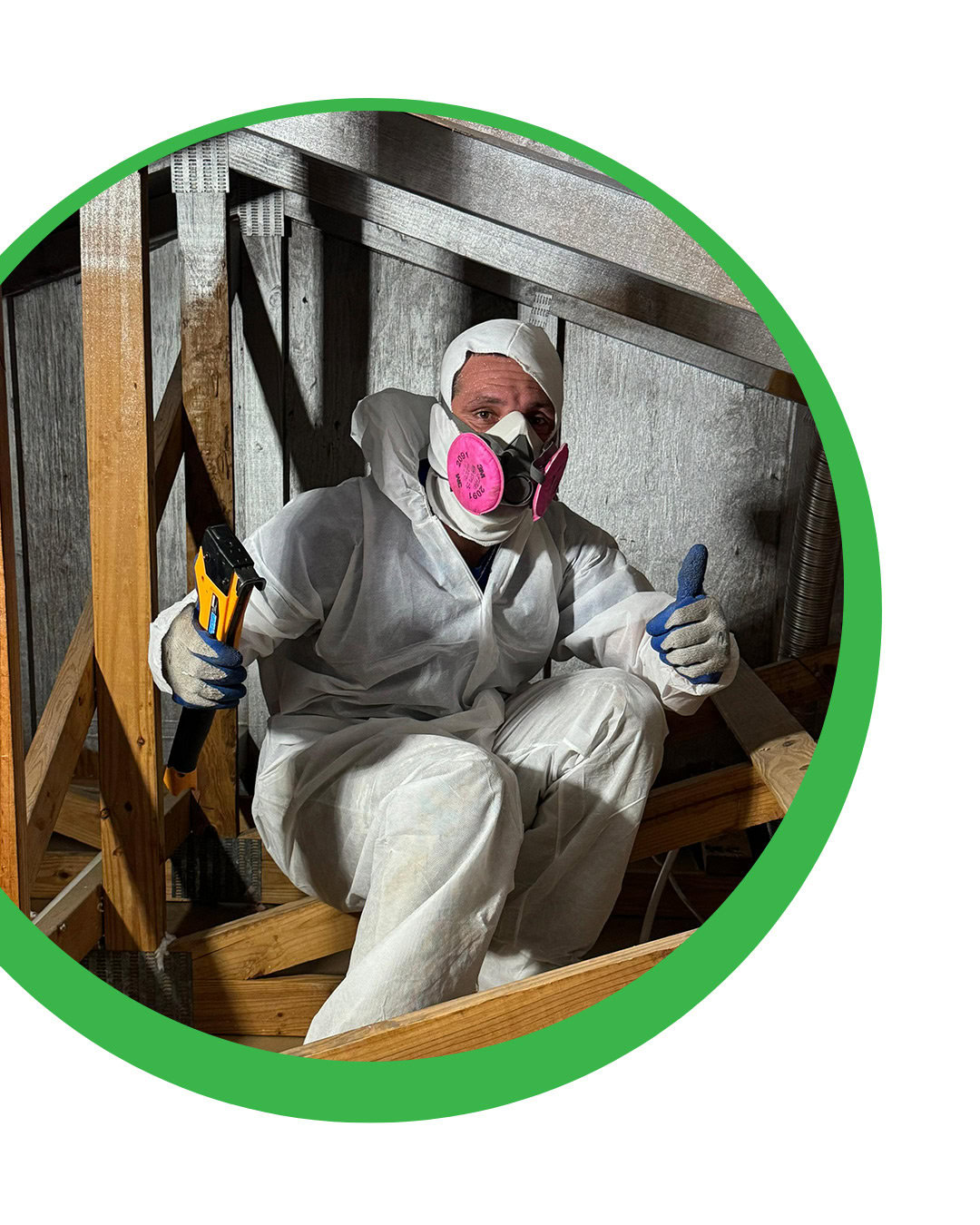
We resolved a severe climate control failure in a coastal single-family home experiencing seventy-five percent relative humidity and four-degree room temperature variances. By reattaching disconnected return ducts, sealing attic plenums with mastic adhesive, and replacing damaged insulation, we restored complete indoor air balance while reducing monthly equipment runtime by thirty-four percent.
Upon initial site inspection, the homeowner reported that their three-ton heat pump ran continuously throughout summer months while interior relative humidity remained above seventy percent. Our diagnostic protocol began with static pressure testing and thermal camera imaging across the attic assembly. We identified three major failure modes: a fully disconnected return duct pulling hot 115-degree Fahrenheit attic air directly into the air handler, major tears in supply flex ducts, and compressed blown-in insulation rated under R-11.
We executed a comprehensive restoration plan over two days to resolve these structural and mechanical flaws:
- Reattached and mechanically fastened the disconnected return duct collar using stainless steel draw bands and code-compliant mastic tape.
- Cleaned all internal supply trunks using high-efficiency agitation whips and a 5,000 CFM negative air vacuum system to clear ten years of particulate accumulation.
- Applied liquid mastic sealant reinforced with fiberglass mesh across all plenum joints and register boots, dropping duct leakage from thirty-two percent to under four percent.
- Extracted wet, compressed fiberglass insulation and blew in R-38 loose-fill cellulose insulation across the entire 1,800-square-foot attic footprint.
Following project completion, static pressure normalized to manufacturer specifications, indoor relative humidity dropped to forty-eight percent, and energy consumption fell by over 180 USD per billing cycle.
Strategic Decision Framework: DIY Quick Fixes vs. Professional System Restoration
Selecting between temporary DIY cleaning and professional whole-system restoration requires evaluating equipment capacity, access scope, and long-term structural impact. Professional service utilizes commercial HEPA negative-air collectors, specialized mechanical agitation, and diagnostic static-pressure testing to extract deep contaminants and seal duct leaks without causing hidden damage to flex duct liners.
Homeowners attempting self-cleaning often rely on standard shop vacuums that lack sufficient static lift and airflow volume to pull debris from main trunk lines. Furthermore, inserting rigid brushes into flexible ductwork can puncture the inner foil liner, causing uninspected air leaks behind wall cavities. The standard recommendations set forth in the U.S. Environmental Protection Agency HVAC guidelines emphasize that incomplete or improper duct cleaning can damage system components or release concentrated particulate matter into living spaces.
| Evaluation Metric | DIY or Entry-Level Cleaning | Professional System Restoration |
|---|---|---|
| Equipment Capabilities | Standard shop vacuum (100 to 150 CFM) | Truck-mounted HEPA negative air unit (2,500 to 5,000+ CFM) |
| System Access Scope | Vent register openings only | Whole-system isolation, trunk line access ports, plenum sealing |
| Diagnostic Verification | Visual vent check | Static pressure testing, video scope inspection, smoke testing |
| Structural Impact | Risk of tearing inner flex duct liners | Standardized agitation tools tailored for sheet metal vs flex duct |
| Average Project Cost | 50 to 150 USD (Tools and Supplies) | 450 to 1,200 USD (Comprehensive Service) |
| Long-Term Durability | Temporary surface dust removal | Multi-year airflow restoration and verified energy reduction |
Integrating Attic Insulation with Duct Restoration for Maximum Return
Combining thermal attic insulation upgrades with meticulous air duct sealing creates an airtight, highly insulated thermal envelope that lowers conductive heat gain in hot climates and prevents heat loss during colder months. This integrated system approach prevents unconditioned attic air from infiltrating distribution pathways while ensuring conditioned air reaches living spaces efficiently.
In hot southern regions, attic temperatures routinely exceed 130 degrees Fahrenheit during peak summer afternoons. Uninsulated or leaky ductwork resting in this environment suffers from conductive heat gain, raising supply air temperatures before air reaches indoor supply vents. Upgrading attic insulation to target regional standards shields ductwork from ambient thermal radiation.
When duct sealing is combined with proper R-value insulation depth, heat gain across duct runs drops significantly, allowing your HVAC unit to complete cooling cycles faster and cycle off predictably.
- Reduced thermal transfer rate across supply and return plenum walls.
- Prevention of summertime duct sweating and subsequent attic sheetrock damage.
- Extended functional operating lifespan for air compressor and blower components.
- Compliance with modern building energy codes and eligibility for utility rebate programs.
Actionable Steps to Audit and Upgrade Your HVAC Distribution Network
Upgrading your home distribution system requires a systematic progression from initial professional visual inspection to mechanical airflow balancing and thermal insulation installation. Executing these steps in precise chronological sequence ensures long-term operational efficiency, prevents premature equipment failure, and maximizes indoor air quality benefits across all living areas.
- Schedule a comprehensive visual and thermal camera inspection of supply lines, return plenums, register boots, and attic insulation levels.
- Perform total system pressure diagnostics to measure air duct leakage rates and verify airflow balance across all supply grilles.
- Perform source-removal air duct cleaning utilizing high-powered negative air containment and specialized agitation whips.
- Seal all mechanical joints, seams, and register connections with low-VOC mastic sealant and foil-backed tape.
- Upgrade attic insulation levels to meet target regional R-value requirements, ensuring even coverage over duct connections.
- Inspect and clean dedicated clothes dryer transition ducts and external termination hoods to eliminate fire hazards.
Frequently Asked Questions
How frequently should home air ducts be professionally cleaned?
We recommend inspecting duct systems every three to five years and cleaning them when visible particulate accumulation, biological growth, or pest infestation is present. Homes with shed-prone pets, recent interior remodeling projects, or occupants suffering from severe respiratory allergies may require more frequent maintenance intervals.
Can duct cleaning and sealing reduce household energy bills?
Proper duct sealing and cleaning reduces heating and cooling energy usage by up to thirty percent by restoring designed airflow and eliminating duct leakage. Eliminating leaks prevents conditioned air from escaping into unconditioned spaces like attics, allowing your HVAC unit to satisfy thermostat settings faster and reduce total compressor runtime.
What are the main signs that a duct system is leaking or dirty?
Common indicators of leaking or dirty ducts include uneven room temperatures, excessive dust accumulation on furniture shortly after cleaning, and unexplained spikes in monthly utility costs. You may also notice dark dirty lines along carpet edges or around supply register vents, indicating air filtration leaks through structural wall voids.
Is it necessary to replace attic insulation when sealing ducts?
Insulation replacement is necessary if existing materials are compressed, contaminated by pests, water-damaged, or below recommended local R-value standards. Replacing degraded insulation while sealing air ducts ensures a complete thermal envelope that maximizes whole-home energy efficiency and prevents thermal bridging.
How does dryer vent cleaning impact overall home safety?
Cleaning dryer vents removes highly combustible lint buildup, significantly reducing home fire risks while restoring appliance drying efficiency and lowering energy consumption. Restricted dryer vents force clothes dryers to run at dangerously elevated operating temperatures, accelerating internal component wear and extending drying cycle times.
Sources
- U.S. Environmental Protection Agency (EPA) – Should You Have the Air Ducts in Your Home Cleaned?: https://www.epa.gov/indoor-air-quality-iaq/should-you-have-air-ducts-your-home-cleaned
- U.S. Department of Energy & ENERGY STAR – Benefits of Duct Sealing: https://www.energystar.gov/saveathome/heating_cooling/duct_sealing
Related Articles
The $5000 Rule For HVAC Systems
The Invisible Upgrade For Your Palm Coast Property
Home Upgrades That Add Value In St. Augustine
Spring Cleaning? Don’t Forget The Most Important Part Of Your Palm Coast Home!
Where Comfort Meets Efficiency: The Airwayz Guide To Cleaner Air, Lower Bills, And Healthier Florida Living
People Also Ask
For homeowners in Palm Coast and Flagler County, kitchen and bathroom remodels consistently offer the highest return on investment, often recouping 60 to 80 percent of costs at resale. Energy-efficient upgrades, such as new windows or improved attic insulation, also significantly boost value by lowering utility bills. Adding a deck or patio expands livable space, which buyers strongly prefer. For more insights tailored to our local market, be sure to read our internal article titled Home Upgrades That Add Value In St. Augustine. Airwayz Duct and Insulation recommends focusing on projects that enhance both comfort and curb appeal for the best long-term value.
The hardest month to sell a house is often December, due to the holiday season and colder weather in many regions. However, in Palm Coast and Flagler County, the market can be more consistent year-round thanks to mild winters. For homeowners looking to sell, a clean and efficient HVAC system is a major selling point. Airwayz Duct and Insulation recommends ensuring your ductwork and insulation are in top shape to improve energy efficiency and indoor comfort, which can help your home stand out even in a slower month.
For homeowners looking to maximize resale value, focusing on energy efficiency and curb appeal offers the best return. Upgrading your HVAC system and ensuring your ductwork is properly sealed and insulated can significantly lower utility bills, a major selling point. Modern, energy-efficient windows and a well-insulated attic are also high-impact investments. A fresh coat of neutral paint and updated landscaping create a strong first impression. For a deeper dive into strategic improvements, see our internal article titled Home Upgrades That Add Value In St. Augustine. Airwayz Duct and Insulation recommends prioritizing these core systems to make your property more attractive to buyers in our local market.
When comparing a 3 bedroom versus a 4 bedroom home for resale value in the Palm Coast and Flagler County market, the four-bedroom layout typically commands a higher price and sells faster. A fourth bedroom adds significant flexibility, serving as a dedicated home office, guest room, or nursery, which appeals to a broader range of buyers, especially families. This extra room often translates to a stronger return on investment. For homeowners looking to maximize their property's appeal, ensuring the HVAC system is properly sized for a four-bedroom home is crucial for comfort and efficiency. Airwayz Duct and Insulation can help verify that your ductwork and insulation support the demands of a larger home, which is a key factor for serious buyers.
Yes, strategic home upgrades can significantly increase your property's value, especially when they improve energy efficiency and indoor air quality. In Palm Coast and Flagler County, buyers are increasingly looking for homes with modern, efficient systems. A duct sealing or insulation upgrade, for example, reduces energy bills and enhances comfort, making your home more attractive on the market. For a deeper look at this topic, we recommend reading our internal article The Invisible Upgrade For Your Palm Coast Property. Airwayz Duct and Insulation regularly sees how these improvements provide a strong return on investment for local homeowners.

