
The Plant That Removes Airborne Mold Naturally: What Works, What Doesn’t, And How To Build A Complete Defense
Table of Contents
Biological Mechanisms of Botanical Air Purification
Indoor houseplants support atmospheric air quality through transpiration humidity buffering, rhizosphere microbial competition, and stomatal phytoremediation. Rather than mechanically filtering spores like HEPA systems, plants regulate ambient moisture swings, harbor beneficial soil bacteria that neutralize falling fungal spores, and absorb gaseous organic compounds through leaf stomata and root pathways.
Understanding how vegetation interacts with atmospheric contaminants requires examining three distinct biological pathways. First, transpiration allows plants to release water vapor continuously into the surrounding atmosphere. When managed correctly in under-hydrated indoor settings, this buffering effect stabilizes relative humidity levels. However, in environments where ambient relative humidity already exceeds 60 percent, unchecked transpiration can unintentionally supply the moisture required for fungal spore germination.
Second, the root system creates a localized biological ecosystem known as the rhizosphere. Soil-dwelling microflora in healthy organic potting media actively compete against incoming airborne fungal spores that settle on the soil surface. Beneficial bacteria consume organic particulates, preventing dormant spores from colonizing the pot media.
Third, phytoremediation enables plants to absorb gaseous atmospheric contaminants. In the 1989 NASA Clean Air Study, lead researcher Bill Wolverton demonstrated that specific potted foliage absorbs gaseous volatile organic compounds, including benzene, formaldehyde, and trichloroethylene, through leaf stomata. Translocated toxins travel directly to root pathways, where soil microbes break them down into harmless organic substances.
- Transpiration buffers ambient humidity fluctuations in under-hydrated indoor zones.
- Rhizosphere microbes outcompete mold spores landing on potting soil surfaces.
- Leaf stomata absorb gaseous volatile organic compounds for microbial root breakdown.
English Ivy Performance Capabilities and Environmental Constraints
English ivy captures airborne particles efficiently under sealed laboratory conditions, but its real-world residential performance remains strictly supplemental. While localized chamber experiments demonstrate sharp airborne fungal spore reductions, normal home air exchange rates render ivy insufficient as a standalone remediation method, requiring structural moisture management and mechanical air filtration.
In a 2005 laboratory study presented at the American College of Allergy, Asthma & Immunology annual conference, researchers evaluated English ivy inside an airtight container with moldy substrate. Within 12 hours, airborne mold particles inside the sealed chamber decreased by 78.5 percent, while fecal aerosol particles dropped by 94.25 percent. The investigation confirmed that Hedera helix actively captures airborne biological particulates under static, zero-airflow conditions.
Despite these impressive chamber metrics, operational residential structures do not function like sealed glass containers. Lived-in spaces continuously exchange air through doors, windows, exhaust fans, and forced-air HVAC systems. A single residential living room would require dozens of mature ivy plants to replicate the leaf-surface-to-air ratio utilized in the laboratory chamber.
Furthermore, English ivy presents safety risks for pet owners and families with young children. The plant contains falcarinol and toxic saponins, which trigger severe gastrointestinal distress, hypersalivation, and skin irritation if ingested by dogs or cats. Property owners utilizing English ivy must place pots in elevated hanging baskets well out of reach and wear protective gloves during pruning.
Comparative Analysis of Botanical Indoor Air Support
Selecting houseplant species for indoor atmospheric enhancement depends on room light levels, ambient humidity, pet safety concerns, and maintenance requirements. While no houseplant eradicates deep HVAC mold, matching species traits to localized room environments creates an advantageous secondary layer of environmental support across residential and commercial buildings.
Different houseplant species deliver targeted benefits based on their natural transpiration rates and foliage structures. High-transpiration plants like the Boston Fern excel at stabilizing dry indoor air, whereas low-maintenance succulents thrive in high-sunlight locations without adding excessive moisture.
| Plant Species | Primary Biological Mechanism | Optimal Indoor Location | Maintenance Requirement | Toxicity Level |
|---|---|---|---|---|
| English Ivy (Hedera helix) | Particulate capture and VOC absorption | Elevated hanging baskets with indirect light | Moderate | Highly toxic to pets and humans |
| Peace Lily (Spathiphyllum) | Spore deposition support and VOC breakdown | Bathrooms, laundry rooms, shaded corners | Moderate | Toxic to cats and dogs |
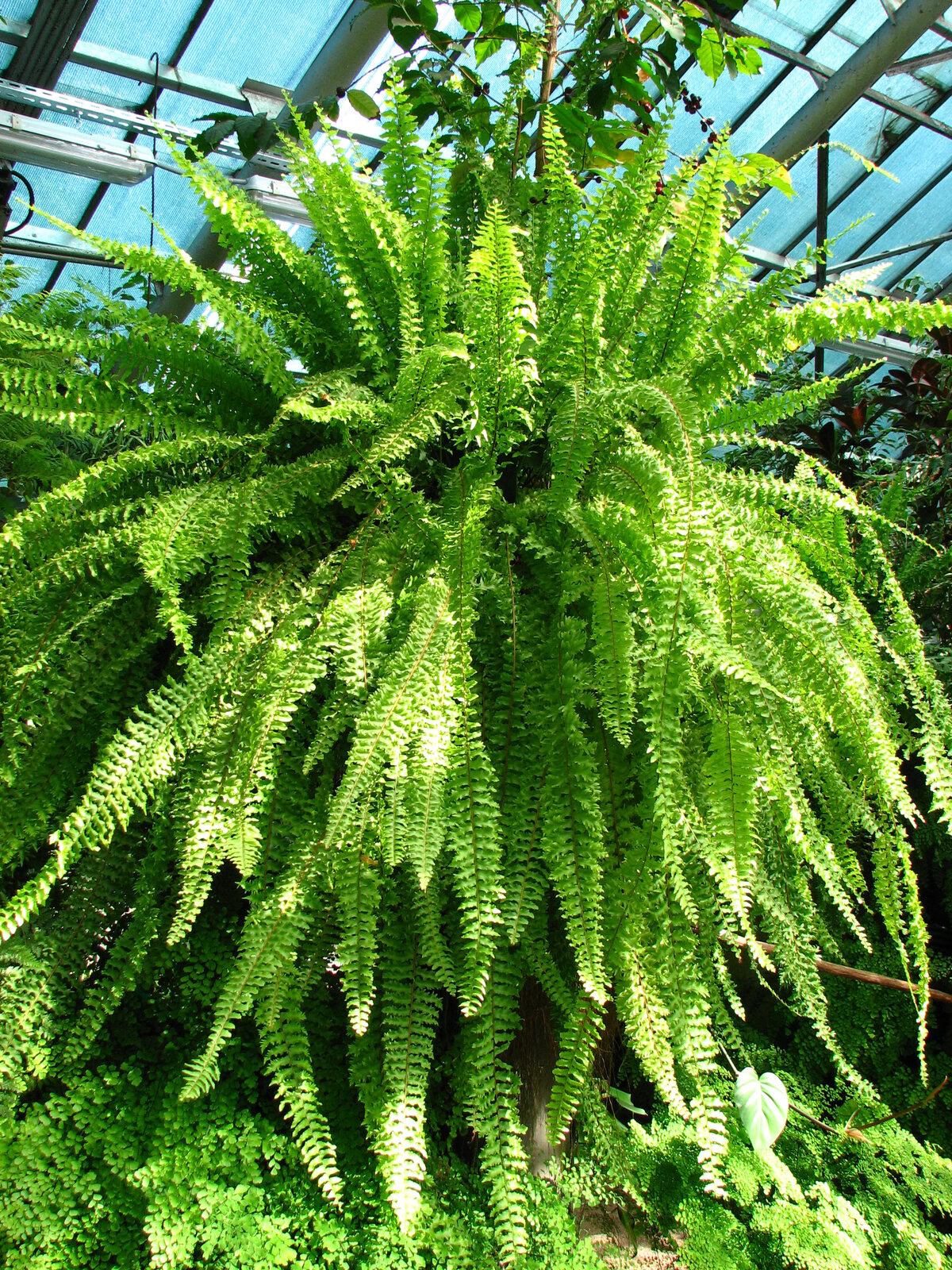
| Boston Fern (Nephrolepis exaltata) | High transpiration rate for moisture stabilization | Kitchens and humid bath spaces | High | Non-toxic and pet safe |
| Snake Plant (Sansevieria trifasciata) | Crassulacean acid metabolism and nighttime oxygen | Bedrooms and low-light hallways | Very Low | Toxic to pets |
| Spider Plant (Chlorophytum comosum) | Rapid formaldehyde and xylene absorption | Living rooms and home office desks | Low | Non-toxic and pet safe |
| Aloe Vera (Aloe barbadensis) | Nighttime oxygen production and surface adsorption | Bright windowsills and sunrooms | Low | Mildly toxic to pets |
To maximize the supplemental air-clearing capacity of these species, proper care protocols must be strictly enforced. Overwatering creates soggy soil conditions that encourage saprophytic soil molds and fungus gnat infestations. We recommend allowing the top inch of potting soil to dry completely between waterings and emptying saucer catch trays immediately.
Practical Field Diagnostic: Resolving Mold Escalation Beyond Botanical Limits
Relying exclusively on air-purifying foliage during active mechanical mold outbreaks fails because plants cannot neutralize ductwork contamination or structural moisture intrusion. In our field inspections, we frequently discover severe HVAC fungal colonization hidden behind healthy houseplant displays, necessitating comprehensive duct remediation, vapor sealing, and mechanical dehumidification.
In one notable field restoration project, we inspected a residential property where the home occupant suffered persistent coughing, nasal congestion, and a heavy musty odor in the main living area. The owner had placed twelve large English ivy and Peace Lily plants throughout the room, expecting the foliage to clear the air naturally. However, indoor relative humidity measured 68 percent, and baseline air sampling revealed elevated airborne Cladosporium spore counts exceeding 4,200 spores per cubic meter.
Our diagnostic inspection identified that the home air handler was pulling unconditioned, saturated crawlspace air through an unsealed supply plenum and disconnected flex duct joints. Mold colonies had blanketed the internal fiberglass duct liner, releasing thousands of active spores into the air stream every time the air conditioner cycled on. The biological uptake rate of the living room plants was completely overwhelmed by the mechanical distribution of mold spores from the ductwork.
To resolve this complex environmental failure, our team executed a multi-step remediation protocol:
- We isolated the entire HVAC system under negative air pressure using industrial HEPA filtration units to prevent spore cross-contamination during cleaning.
- We mechanically brushed and contact-vacuumed all rigid metal trunk lines while completely replacing the heavily contaminated flexible ductwork.
- We treated all hard internal HVAC surfaces with an EPA-registered botanical antimicrobial agent to neutralize remaining fungal structures.
- We sealed all duct connections, seams, and floor boots with fiber-reinforced mastic duct sealant to halt crawlspace air infiltration.
- We installed a dedicated whole-home dehumidifier tied directly into the HVAC return duct, locking indoor relative humidity consistently at 42 percent.
Following our mechanical intervention, post-remediation air testing confirmed airborne spore counts fell below 220 spores per cubic meter, matching clean outdoor baselines. The persistent musty odor vanished entirely. The homeowner retained the houseplants for aesthetic enjoyment, but the underlying health hazard was successfully eliminated through proper mechanical HVAC engineering.
Step-by-Step Execution of a Multi-Layered Indoor Mold Defense System
Building a resilient defense against indoor mold requires a structured, multi-tiered approach prioritizing moisture containment, mechanical filtration, and duct network maintenance. Incorporating houseplants represents the final supplemental layer of this strategy, functioning effectively only when source moisture control, relative humidity management, and mechanical HVAC cleanliness are fully operational.
To achieve lasting indoor air purity, home and business owners should follow a sequential engineering framework that addresses root causes before relying on passive biological support.
- Fix all structural plumbing leaks, roof penetrations, and crawlspace moisture intrusion paths within 24 to 48 hours to prevent fungal spore germination.
- Maintain indoor relative humidity strictly between 30 percent and 50 percent using calibrated whole-home or portable dehumidifiers alongside dedicated exhaust ventilation.
- Upgrade HVAC system air filters to high-efficiency MERV 11 or MERV 13 rated media, ensuring tight filter frame seals to prevent air bypass.
- Schedule professional HVAC duct inspections and mechanical duct cleaning every three to five years to clear accumulated organic dust, dander, and fungal detritus.
- Deploy portable HEPA air purifiers in high-traffic or poorly ventilated rooms to capture microscopic biological particulates continuously.
- Position pet-safe houseplants strategically in well-lit, ventilated living zones as a final aesthetic and subtle biological air-buffering layer.
According to the U.S. Environmental Protection Agency mold control guidelines, controlling indoor moisture is the single most vital factor in preventing indoor mold growth. When building systems maintain relative humidity below 50 percent, dormant mold spores cannot synthesize the water required to form expanding fungal colonies.
Key Indicators for Professional Mold Remediation and Duct Cleaning
Homeowners and facility managers must recognize when indoor air quality issues exceed the remedial capacities of organic air purification methods. When persistent dampness, elevated indoor relative humidity, visible microbial clusters, or musty odor emissions manifest, immediate mechanical diagnostics and professional duct cleaning become necessary to safeguard occupant health and building integrity.
Plants cannot resolve systemic mold infestations that originate within hidden building cavities or mechanical air distribution systems. Attempting to manage active fungal outbreaks with houseplants alone allows mold colonies to multiply uninhibited inside wall cavities, ceiling plenums, and supply ducts.
Property owners should immediately request professional HVAC and duct cleaning evaluations upon discovering any of the following warning signs:
- Visible black, green, or white fungal growth spreading across supply registers, air handler coils, drywall, or baseboards.
- A persistent, earthy, or musty odor wafting from supply vents when the heating or cooling system turns on.
- Recurrent indoor relative humidity measurements exceeding 60 percent despite continuous air conditioner operation.
- Accumulation of heavy dark dust trails around supply air registers, indicating contaminated ductwork or severe air duct leakage.
- Occupants experiencing unexplained respiratory irritation, coughing, sneezing, or watery eyes that improve rapidly upon leaving the building.
Professional air duct cleaning eliminates the internal reservoir of organic dust and moisture that feeds fungal colonies. By removing debris from duct surfaces using HEPA-filtered vacuum draw and pneumatic agitation, we eliminate the primary pathways through which airborne mold spores spread throughout indoor environments.
Frequently Asked Questions
Can English ivy eliminate 78 percent of airborne mold in an operational residential home?
No, English ivy cannot eliminate 78 percent of airborne mold in an operational home because that reduction figure was recorded strictly under sealed laboratory conditions. In active residential spaces, continuous outdoor air exchange, HVAC air movement, and ongoing indoor moisture sources far exceed the localized absorption capacities of a few plants. Achieving meaningful airborne spore reduction in lived-in structures requires mechanical air filtration, source moisture control, and clean ductwork.
Which houseplant is best suited for a windowless bathroom with high humidity?
The Snake Plant and Peace Lily are the best houseplants for windowless bathrooms because they tolerate low light levels and assist in buffering ambient moisture. However, no houseplant can substitute for proper mechanical exhaust ventilation in high-humidity zones. In windowless spaces, operating a properly sized, exterior-exhausting bath fan is essential to prevent relative humidity from exceeding 50 percent.
How many houseplants are required per square foot to clean indoor air?
Based on meta-analysis calculations extrapolated from sealed closed-chamber experiments, a typical building would require between 10 and 1,000 plants per square meter to replicate laboratory air purification rates. For general home enhancement, placing one medium-sized houseplant per 100 square feet offers modest decorative and atmospheric buffering benefits. Home and business owners should view plants as aesthetic supplements rather than primary air filtration systems.
Do houseplants remove mold colonies growing inside HVAC air ducts?
No, houseplants cannot remove mold colonies growing inside HVAC air ductwork because plants only interact with ambient air in their immediate room environment. When fungal spores establish active colonies inside air handlers, supply plenums, or internal duct liners, the system blower distributes spores throughout the entire building during every operational cycle. Neutralizing ductwork mold requires professional mechanical contact agitation, HEPA negative-pressure containment, and antimicrobial surface treatment.
What is the ideal indoor humidity level to prevent indoor mold growth?
According to official environmental control standards, indoor relative humidity should always be maintained between 30 percent and 50 percent. Keeping indoor relative humidity strictly below 50 percent prevents dormant airborne fungal spores from absorbing the atmospheric moisture required to germinate on building materials. If indoor relative humidity consistently exceeds 60 percent, mechanical dehumidification must be installed immediately regardless of houseplant presence.
Sources
- HealthDay News & American College of Allergy, Asthma & Immunology (ACAAI) Annual Conference Presentation (2005). “English Ivy Removes Airborne Particulates.”
- NASA Technical Reports Server (NTRS) & Wolverton, B.C. (1989). “A Study of Interior Landscape Plants for Indoor Air Pollution Abatement” (NASA-TM-108061).
- U.S. Environmental Protection Agency (EPA). “A Brief Guide to Mold, Moisture, and Your Home” (EPA 402-K-02-003).
- American Lung Association. “Potted Plants Do Not Improve Indoor Air Quality: Meta-Analysis Review.”
- U.S. Environmental Protection Agency (EPA). “Mold Remediation in Schools and Commercial Buildings / HVAC Systems Guidance.”
Related Articles
DIY Natural Air Cleaning For Your Home
Natural Detox For Your Home’s Air
Enhancing Air Quality In Your Bedroom
Nature’s Air Purifiers For Your Home
People Also Ask
While no single plant can remove 78% of airborne mold, certain houseplants are highly effective at improving indoor air quality. The English Ivy (Hedera helix) is often cited for its ability to filter airborne mold spores, though specific percentages vary by study. For a comprehensive solution, Airwayz Duct and Insulation recommends combining plants like English Ivy, peace lilies, and snake plants with professional HVAC maintenance. Proper ventilation and regular duct cleaning are essential to reduce mold spore concentration. Without addressing the source, such as moisture in ductwork, plants alone cannot achieve a 78% reduction. For Palm Coast and Flagler County homes, a balanced approach of greenery and professional air quality services offers the best results.
For homeowners in Palm Coast and Flagler County looking to reduce airborne mold naturally, certain houseplants can help. The Boston Fern is highly effective at absorbing mold spores and improving humidity balance. Peace Lilies and English Ivy also filter common mold spores from the air. To maximize these benefits, place several plants in areas prone to moisture, like bathrooms or kitchens. For a comprehensive guide on this topic, refer to our internal article titled Best Plants For Improving Home Air Quality. At Airwayz Duct and Insulation, we recommend combining these plants with proper ventilation and regular duct cleaning to fully address mold concerns.
To effectively kill airborne mold spores, you need to address both the source and the air quality. High-efficiency particulate air (HEPA) filters in your HVAC system or a standalone air purifier can capture spores, but they do not "kill" them. Ultraviolet germicidal irradiation (UVGI) lights, installed within your ductwork, are a proven method to neutralize mold spores and other microorganisms as air passes over them. However, the most critical step is controlling humidity. Mold spores cannot grow or remain airborne in an environment below 50% relative humidity. For homeowners in Palm Coast, this is especially vital due to our humid climate. For a deeper understanding of this local challenge, we recommend reading our internal article titled 'Palm Coast's Humidity & Your Home: A Recipe For Mold In Air Ducts' at Palm Coast's Humidity & Your Home: A Recipe For Mold In Air Ducts. Airwayz Duct and Insulation can help assess your system for the best solution.
For removing toxins from the air, the Snake Plant (Sansevieria) is highly effective, as it filters out benzene, formaldehyde, and xylene while releasing oxygen at night. The Peace Lily and Spider Plant are also excellent choices for absorbing common household pollutants like trichloroethylene and carbon monoxide. To maximize the benefits, place several plants in well-ventilated areas like your living room or bedroom. For professional advice on improving indoor air quality alongside your plants, Airwayz Duct and Insulation recommends reading our detailed guide in the article Nature’s Air Purifiers For Your Home, which explains how plants and clean ductwork work together for a healthier home.
For managing mold in a bathroom in Palm Coast and Flagler County, the best plants are those that thrive in high humidity and help purify the air. English Ivy is highly effective at absorbing airborne mold spores. Boston Ferns and Peace Lilies also excel at removing common indoor pollutants and mold particles. Spider Plants are another low-maintenance option that can reduce mold-causing moisture. While these plants help improve air quality, they cannot replace proper ventilation and cleaning. To truly prevent mold, ensure your bathroom has adequate exhaust fans and address any leaks promptly. For severe mold issues in ductwork or insulation, Airwayz Duct and Insulation can provide professional remediation services to keep your home safe.

